
The dollar reclaims 101 as Treasury yields cross five percent and gold retreats
Strong US data and louder talk of more Fed tightening sent the dollar index to an eight-week high, pushed the 10-year Treasury yield past a level not seen since 2007, and knocked gold below $4,300 — with sterling and the euro sliding in the greenback's wake.
Published 28 September 2026 · 06:00 GMT
Key facts
- The dollar index closed at 101.096 on September 23 — its highest in eight weeks — after a flash composite PMI of 58.4 signaled the fastest US private-sector expansion in more than five years. HTX Insights
- The 10-year Treasury yield touched 5.225% on September 24 — its highest since 2007 — while the 2-year climbed near 4.9%, repricing the odds of an October Fed hike from about 52% to about 66%. TradingNews; InsiderFinance
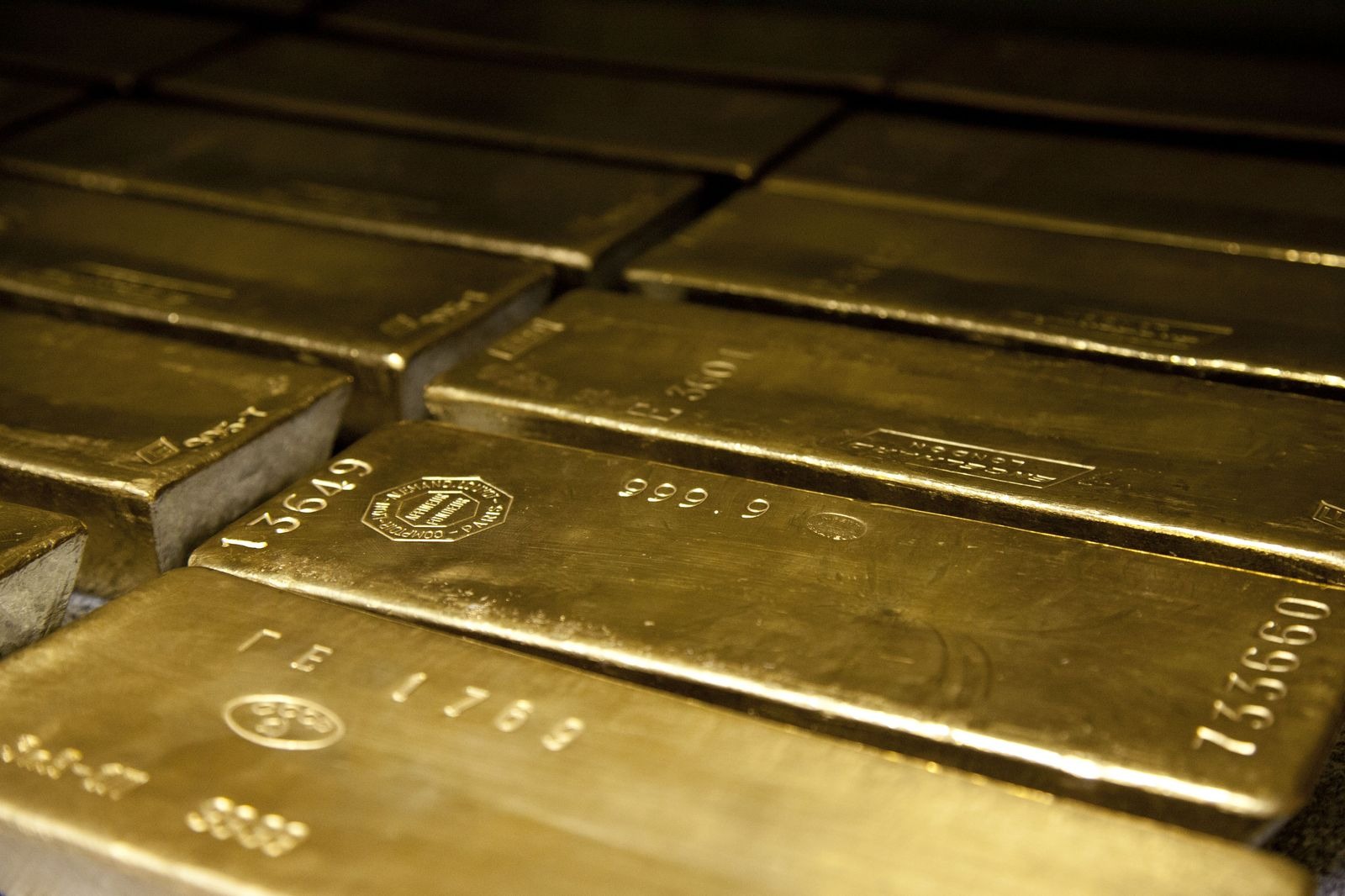
- Spot gold fell to roughly $4,288 an ounce — about a 2% weekly decline — while silver fell further, down about 3.7% to $63.90, as a stronger dollar and rising yields outweighed safe-haven demand. HDFCSky, India
- Sterling dropped to about $1.3216 — its lowest since late June — and the euro fell toward $1.1367 as Fed officials signaled more tightening ahead. TradingNews
- Central banks bought a record 289 tonnes of gold in Q2 2026 — up more than 60% year-on-year — with China extending its buying streak to 22 straight months, a structural bid cushioning gold's fall. HDFCSky; Discovery Alert
The dollar is back, and it is not asking for permission.
The dollar index closed at 101.096 on September 23 — its highest level in eight weeks. In the same week, the 10-year Treasury yield crossed 5% for the first time since 2007, touching 5.225% on September 24. The greenback is not just strong. It is charging.
The spark was a number: 58.4. The flash composite PMI for September showed American private-sector activity expanding at its fastest pace in more than five years — factories and services, together, accelerating.
The PMI deserves its reputation as the market's early warning system. It is a survey, not a statistic — purchasing managers reporting whether orders, output and hiring are up or down — and 50 is the line between expansion and contraction. At 58.4, the American private sector is not just growing; it is growing at a pace that leaves the line in the rear-view mirror. The "flash" reading lands weeks before the official data, which is why bond traders treat it as a preview of the economy the Fed will be looking at when it meets in October.
Bond traders read that number the way a doctor reads a fever. If the United States economy is running this hot with oil above $100 a barrel, interest rates are not high enough — or at least, not going down.
So yields climbed. The 10-year's move above 5% is a line with history: the last time it lived there, the iPhone was a rumor and subprime mortgages were considered innovation.
The history is worth pausing on. The last time the 10-year Treasury paid 5%, the world was leveraged to the hilt and nobody knew it yet — the financial crisis was still a year away, and "subprime" was a business model, not a cautionary tale. The economy returning to 5% today is a different animal: it arrives after years of inflation fighting, with government debt vastly larger and the Fed's own balance sheet still shrinking. The number is the same. Nothing else is.
The 2-year yield climbed toward 4.9%, and with it, the market's bet on October. Traders now price roughly a two-in-three chance — about 66%, up from 52% — that the Federal Reserve raises rates again next month.
Consider the whiplash. Weeks ago, the debate was when the Fed might cut. Now the question is how many hikes are left. The data did that.
The whiplash has a mechanics. The Fed sets one rate, but the market prices the path — and the path is priced off data that arrives in lumps. A single hot PMI, stacked on oil above $100 and an economy that refuses to cool, reprices the whole curve at once: the 2-year, which lives and dies on near-term Fed expectations, moved first, and the 10-year, which prices the decade, followed. The jump from 52% to 66% is not a forecast. It is the market admitting it was wrong about the direction and correcting in a hurry.
Growth is too hot, yields are too high, and the Fed is somehow behind on both.
The dollar's surge is the mirror image. When American yields pay 5% for the safest paper on earth, global capital does the arithmetic and buys dollars.
Sterling felt it first. The pound slid to about $1.3216 — its weakest since late June — as traders priced more Fed tightening. The euro sagged toward $1.1367. Against the dollar's gravity, everyone else is falling.
There is a cruel elegance to the mechanism. The United States fights its inflation with higher rates; the rest of the world imports the result through a weaker currency. A strong dollar is America's tightening, delivered to your doorstep.
For the emerging world, the doorstep delivery is the whole story. Trillions in dollar-denominated debt get heavier with every tick of the index; capital that was hunting yield in São Paulo, Jakarta and Mumbai does the same arithmetic as everyone else and goes home to 5% risk-free. Central banks from Brazil to Indonesia face the classic squeeze: defend the currency by hiking into weakness, or let it slide and import inflation through every dollar-priced commodity. The Fed does not set out to tighten the world. It just does.
Gold, the oldest hedge in the book, took the hit. Spot prices fell to roughly $4,288 an ounce — about a 2% weekly decline — while silver dropped harder, down some 3.7% to $63.90.
The logic is arithmetic, not sentiment. Gold pays no interest. When the 10-year pays 5.2%, every ounce in the vault costs you the yield you didn't collect. A strong dollar adds a second tax: gold gets more expensive in euros, pounds, and rupees.
Keep the selloff in perspective: $4,288 an ounce is a price that would have been fantasy a decade ago. Gold's retreat is a 2% weekly dip inside a historic bull run, not a rout — the metal spent the year climbing on the same fears (inflation, debt, geopolitics) that are now, temporarily, outvoted by the carry trade. Silver's harder fall is the tell: the more speculative metal always swings wider, in both directions.
Safe-haven demand has not vanished — the world is hardly short of reasons to hide. It is simply being outvoted, for now, by the carry trade.
But beneath the selloff, a floor is being built — by the buyers who never trade. Central banks bought a record 289 tonnes of gold in the second quarter of 2026, up more than 60% from a year earlier.
China leads the parade. The People's Bank has now bought gold for 22 consecutive months — nearly two years of steady accumulation, the longest streak in its modern history.
The central-bank bid is not about price. It is about insurance — the kind you buy after watching someone else's house burn. When Western sanctions froze Russia's foreign-exchange reserves in 2022, every central bank on earth learned the same lesson: dollars in a Western bank are dollars that can be switched off. Gold in your own vault cannot. The record 289 tonnes is the sound of that lesson being applied, quarter after quarter, buyer after buyer, regardless of what the spot price does in any given week.
The paradox is delicious: central banks are buying gold because they want insurance against the dollar, while investors are selling gold because they want the dollar's yield. Both sides are reading the same world. They just disagree about what it costs.
For borrowers, the message is simpler and less funny. A 5% risk-free rate reprices everything: mortgages, corporate bonds, emerging-market debt. The cheap-money era is not pausing. It is being buried.
The burial is thorough because the repricing compounds. A mortgage written at 3% does not care about today's yield, but every new homebuyer, every company rolling its bonds, every developing country refinancing its dollar debt meets the market as it is: 5% risk-free, plus the spread. Corporate treasurers who spent a decade borrowing for buybacks now borrow to survive. The cheap-money era trained a generation of executives, homeowners and finance ministers to treat low rates as weather. The weather has changed, and the wardrobe does not fit.
There is a name for the dollar's particular cruelty in moments like this: it rises both when America booms and when the world panics. In a boom, capital chases the yield; in a panic, it chases the safety. Either way the trade is the same — buy dollars — and either way the rest of the world pays the fare. September 2026 is the boom version: the 58.4 PMI, the 5.225% 10-year, the 101.096 index are all the same story told in three dialects. The dollar does not need a crisis to strengthen. It only needs America to be the best house on a shaky street, and right now the street is shaking while the house is throwing a party.
For the Federal Reserve, strength is permission. A booming economy gives Chair Warsh room to hold — or hike — without breaking anything visible. The doves have no data left to stand on.
The doves' problem is that their best arguments keep expiring. Every soft datapoint of the summer has been overwritten by the autumn's heat: the PMI at 58.4, oil above $100, an economy expanding at its fastest in five years. Warsh does not need to be a hawk to hike in October; he only needs to be a central banker who reads the numbers in front of him. The market's 66% is really a bet that the Fed will do the obvious thing — and the obvious thing, with growth this hot, is more tightening.
The risk, as always, is that confidence is a lagging indicator. Bond markets this certain have been wrong before, usually right before the turn. If the PMI was a blip, today's yields are tomorrow's apology.
And for the rest of the planet, the arithmetic is already done: oil above $100 priced in a surging dollar is the most expensive energy the Global South has bought in years. The North's boom is the South's bill.
Do the importer's math and the bill is brutal. Oil is priced in dollars everywhere on earth; when the barrel costs $100 and the dollar itself costs more of your currency, the energy import bill rises twice — once on the commodity, once on the exchange rate. For India, for Brazil, for every oil importer without a dollar printing press, September's combination is the worst of both worlds: expensive energy in an expensive currency, with a Fed that shows no sign of blinking. The American consumer gets the boom. The Global South gets the invoice.
Western coverage — Reuters, Bloomberg, the Financial Times — emphasizes resilience: American exceptionalism, data-driven and earned.
In this telling, the repricing is the market working as designed. The economy accelerated, expectations adjusted, and the Fed's credibility did the rest. The 1970s ghost stays buried; the soft landing is hardening into something that looks like no landing at all.
The open question in Western commentary is not whether the economy can take 5% — it apparently can — but how long the rest of the world can take the dollar at 101.
The Western lens also treats the bond market as the honest actor in the room. Equities can dream; currencies can posture; but the 10-year at 5.225% is the market putting its money where the data is. In this reading, the repricing is not a tantrum but a verdict — and the verdict is that the American economy, for all its debts and divisions, still outgrows the world's expectations of it.
Eastern coverage — Xinhua, Chinese financial outlets, Russian commentary — emphasizes the export: America fights its inflation with the world's money.
The argument, as carried in Chinese outlets: every Fed hike is a tax collected in other countries' currencies. The strong dollar is not a market accident but the structural privilege of the reserve currency — Washington tightens, and Jakarta, São Paulo, and Delhi pay the spread.
China's 22-month gold-buying streak gets pride of place in this coverage: presented as the patient, strategic answer — diversify the reserves, wait out the cycle, and let the dollar do what strong dollars always do.
The Eastern lens reads the cycle as a morality tale about the reserve currency itself. Strong dollars always end the same way — with emerging-market crises, with the IMF's phone ringing, with the world remembering why it resents the exorbitant privilege. Beijing's gold streak is presented not as a trade but as a thesis: the patient accumulator outlasts the hot cycle, and 22 months of buying is what conviction looks like when the West is busy repricing.
Global South coverage — India's financial press among it — emphasizes the importers' arithmetic: what the dollar's strength costs everyone else.
The read from Mumbai and Delhi: gold may be cheaper in dollars, but it is not cheaper in rupees. Capital follows the yield home — when Washington pays 5% risk-free, emerging-market assets bleed, currencies sag, and central banks from São Paulo to Jakarta face pressure to defend.
The structural buyer gets the last word in this coverage too: 289 tonnes of central-bank gold in a single quarter, up 60% on the year. When the officials are buying the dip, the dip may not be a dip at all.
The South's lens also counts the compounding. A 5% America does not just raise the price of money; it raises the price of everything money buys when it is borrowed in dollars — the oil, the wheat, the debt service. The importer's arithmetic of September is the South's oldest story retold with new numbers: the North sets the rate, the South pays it, and the gold in the central bank's vault is the only asset that does not ask Washington's permission.
The stakes are the oldest in finance: who pays for America's strength. The PMI at 58.4 says the boom is real; the 10-year at 5.225% says the market believes it; the dollar at 101.096 says the world is paying for it. If the data holds, October brings the hike the market now expects, and the repricing continues until something breaks — a currency, a debt market, a central bank's nerve. If the PMI was a blip, the apology will be swift and the rally violent. Either way, the 289 tonnes in the central banks' vaults will still be there: the one trade in this whole repricing that does not depend on being right about next month.
The consensus
- What we agree on
- All three blocs agree on the numbers: the dollar index at 101.096 on September 23, an eight-week high; the 10-year Treasury at 5.225% on September 24, its highest since 2007; October hike odds repriced from about 52% to about 66%; spot gold near $4,288, down roughly 2% on the week; sterling at $1.3216 and the euro near $1.1367. The repricing is real, and it is data-driven.
- What we don't agree on
- On what the repricing means — a healthy economy earning its rates (West), a reserve-currency privilege taxing the world (East), or an importers' squeeze with the bill arriving in local currency (South). The same dollar reads three different ways.
- What we know
- We know the mechanics: a 58.4 PMI reading signaled the fastest US private-sector expansion in over five years; gold pays no yield and loses to 5% paper; central banks bought a record 289 tonnes in Q2, with China extending its streak to 22 months.
- What we don't know yet
- We don't know whether the PMI strength persists or fades — the difference between a justified repricing and an overshoot. We don't know how much safe-haven demand is merely waiting for the dollar's turn.
- What we expect
- We expect at least the October decision to be live — the market says two-in-three for a hike. More dollar strength until the data breaks, more pressure on sterling, the euro, and emerging-market currencies, and central banks quietly buying the gold that investors are selling.